Comments

recent
Latest Movie :
Recent Movies
View As:
Showing posts with label international co-productions. Show all posts

Vitaly Mansky's UNDER THE SUN attempts -- with great beauty -- to reveal North Korea...


...but as usual with documentaries about this most foreign of foreign countries (I wonder if even North Koreans find it pretty strange: probably not, as they appear to have been brainwashed into a kind of near-lobotomization by now), we get pretty much the same old thing. Yes, once again (as in last year's Songs From the North), the state and its minions control everything the documentary filmmaker sees, hears and shoots (they even write the goddamned script!), so that everything the viewer sees and hears in, UNDER THE SUN, the latest attempt to show us North Korea, is... pretense. And pretense -- especially when it is handled as obviously as it is in this "kingdom" -- soon becomes downright boring.

How can it not? And how can a filmmaker begin to tell the truth when the powers-that-be are looking over his shoulder and telling him what to do, 24/7? Well, there is the editing process, once you've left the country. So documentarian Vitaly Mansky (shown at right, and clearly suffering from a North Korean-induced migraine) seems to have confined some of that "fake" script to voice-over and then let his visuals tell a bit different story from what those in power might want. Also, in his finished film, he explains via supertitles that introduce some of the scenes, how the state consistently changed reality into whatever scenario it would rather have us see and hear.

The result of all this is more beautiful visually than we've seen before. The colors are often eye-popping, particularly in scenes such as one in what looks like a soy milk factory, and later at some sort of a group sing-along in which the women are attired in simply gorgeous, colorful costumes. Visually, the movie is much more stunning than the obviously lower-budgeted Songs From the North (hell, it's even more so than that of the much higher-budgeted Hollywood narrative comedy The Interview).

And the scenes Mr. Mansky managed to capture (I am guessing surreptitiously) of everyday North Koreans show a populace in which anything approaching normal behavior has been commandeered by the state. No wonder the people seem to walk around like zombies. (There's a scene in which one after another twosome or threesome poses in front of bright red flowers and murals of the "great leaders" that is hugely sad, as are other scenes in which Mansky's camera captures subway and escalator riders.  These visuals take us so far before repetition and boredom set in.

How many times must be watch the Korean "director" coach his subjects to do and say the scripted stuff,  smile more, and act more joyful before we get the point? A little of this goes a long way, and Under the Sun lasts 105 minutes, during which we even have to sit through some "reshoots."

And while we do get so fun and sadness out of the leading threesome (shown at left) that is forced to portray the "typical" family in the documentary, with a little girl who is particularly sweet and charming, seeing her and her parents in all these faked situations -- at school, joining a political children's group, working in a garment factory, listening to an old military man drone on, watching a dance class, in hospital, and performing in the would-be spectacular finale number -- everything here combines to tell us what we already know. Or at least think we know. And nothing we see or hear here is likely to disabuse us of these notions. (Also, the thought does arise: What happened to this family after the film was released at film festivals around the world, much to the displeasure of the North Korean government?)

So Under the Sun joins the collection of movies, books, news reports, and all else about North Korea that we already have. If there is a way to show the real thing, nobody's found it yet. Instead we get the pretense (and sidelong glances that indicate something more). Over and over again. I'm not sure what is left for us to learn from all this.

The documentary -- released via Icarus Films, in Korean with English subtitles -- opens this Wednesday, July 6, in its U.S. theatrical premiere for a one-week engagement at Film Forum in New York City. Elsewhere? Yes, and you can see all nine, currently-scheduled cities and theaters in which the film will screen by clicking here.
Rate it :

Thrills, fun, surprise -- and beer -- in Daniel Alfredson's KIDNAPPING MR. HEINEKEN


Most kidnapping movies these days are nasty affairs, often with torture and murder tossed in for good measure, so it's a pleasure to report that today's film -- KIDNAPPING MR. HEINEKEN (yes, it's that beer guy), based on a real-life event that many Americans might not be familiar with, occurring in (and lasting most of) the month of November, 1983, in The Netherlands -- is a straight-ahead, what-happened-and-why affair that sticks mostly to the facts, while providing pretty good character studies of the participants as it rolls perkily along.

As co-written by and William Brookfield and reporter Peter R. de Vries and directed handily by Sweden's Daniel Alfredson (shown at left), the film presents us with a group of pals, somewhat down on their luck and looking to make a killing somehow or other, who, when one of its earlier get-rich-quick schemes (below) goes bad, decides to kidnap the local beer maven. The IQ level and social/ emotional smarts of this group vary, so its usual leaders -- Cor (Jim Sturgess) and Willem (Sam Worthington) -- take over to see that events go as planned.

Of course they don't -- which is part of the fun. Other parts are provided by the back stories, especially that of Willem and his family. His father, it seems, spent much of his working life in the Heineken employ and was treated with something less than care and respect when he was let go. Mr. Worthington (below) keeps his anger at a simmer throughout and is quite effective.

Mr. Sturgess (below), on the other hand, seems the more chipper of the two: smart and quick to respond, but with the occasional flciker of anger and hurt that is never fullly explained. When you read the end titles that tell us what eventually happens to each of our fellows, this will give you some interesting information upon which to chew. Meanwhile, you can sit back and enjoy the thrills and surprises -- one of the best of which is provided by, of all things, a Xerox machine.

Not a surprise: how very good is one of the stars of the film, Anthony Hopkins, in the title role. We usually expect good things from this actor, and he does not disappoint here, bringing a fierce intelligence and a certan charm to the role of the beer magnate. Despite the care he appears to show for his chauffeur, who is also kidnapped and threatened with death, you can, without too much effort, ascertain in this man the ability to cast aside anything or anyone that stands in his way.

Hopkins' role, however, is but a supporting one. We could have used more of him, for sure, but that would have taken away from the propulsion and momentum the movie gains as it goes along. The rest of the supporting cast is OK, too, though only Mark van Eeuwen stands out as the worst of these bad apples. Ryan Kwanten is given so little to do that he once again mostly fades into the woodwork as one of the crew, but David Dencik registers well as Heineken's cowed driver.

Any women's roles are mostly decoration, though the actresses do what they can, given their minimal screen time. This one is all about boys being boys, and as such, it comes through as decent fun and games. If it doesn't generate as much box-office as it might, that's probably because it opts for character, time and place over violence and gore,

Kidnapping Mr. Heineken, from the newly christened distributor Alchemy, opens this Friday, March 6, in a limited release. 
Rate it :

August Strindberg like you've never seen him: Liv Ullmann's remarkable, masterful MISS JULIE


Every production I've ever seen -- maybe a half dozen over my lifetime -- of MISS JULIE, the oft-produced play by August Stringberg, has now been obliterated. The new movie of the play, directed with a screenplay based upon Strindberg's original, by Liv Ullmann, while seemingly true to the words and intentions of the playwright, gives such clarity, dignity and fullness to the three characters on view that it simply wipes the floor with every other version I've so far seen.

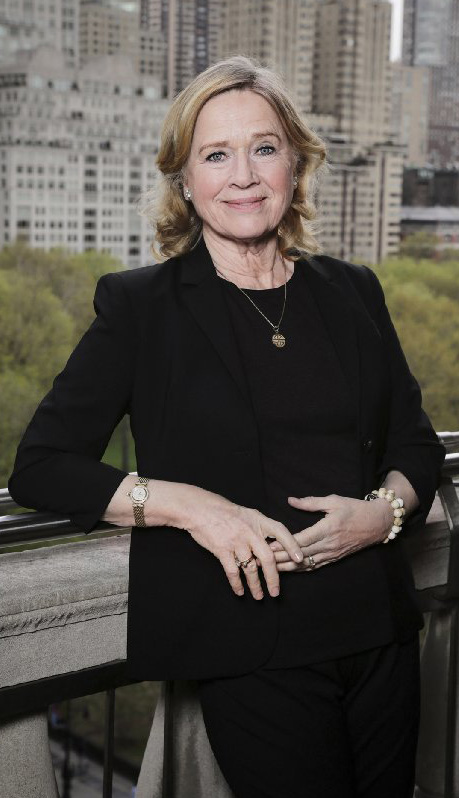
How is this possible? Because, I think, Ms Ullmann, shown at left, rather than offering up the coarsest view of these characters by catering to the most overt and envelope-pushing sexuality laid out in the play (yes, artists of a century past enjoyed pushing those envelopes, too: boot-licking, deflowering, and more than a soupçon of S&M), instead insists upon bringing these people to us as completely and fully -- physically, psychologically, emotionally -- as possible, and in the process makes them and their vehicle bloom as never before. While we certainly see them warts and all -- along with getting the full measure of class, gender and religious issues -- we also understand them and feel for them so strongly that, for the first time in my experience, I found myself not taking sides but wanting each character to somehow obtain her or his deepest longing. I am not at all sure that Strindberg himself would have countenanced this, so it has taken the talented, caring hand of a woman to bring it to fruition.

Casting is as vital to Miss Julie as in any other great play, perhaps more so because you want actors who will probe instead of giving in to the most obvious choices. Ullmann gets that from her three performers: Jessica Chastain and Colin Farrell (above) and Samantha Morton (below).

Ms Morton, in particular, takes what I have always seen as the minor role here and turns it into one of major proportions. Her gravitas wrests attention from the flightier Julie and makes us consider things like the power of the Church and knowing one's place in terms of both class issues and the male prerogative and gives these such a human face that we are in emotional thrall to her. Always a splendid actress, Morton may be giving her finest performance here.

Setting the play in Ireland, rather than in its native Scandinavia works well, too, as Sweden and Ireland at the end of the 19th Century seem to have had a lot in common.

Miss Chastain certainly rises to the challenge that Ullmann has set. She gives a thrillingly real, moment-to-moment performance that keeps us off-balance and yet in her corner. She's regal, gorgeous, sexual, commanding, frightened and finally greatly changed, even before the film's ending -- which, as I recall, is more blatant here than in the play.

The film's biggest surprise may be Mister Farrell. Always a good actor, but one better known for his looks, sex appeal and physical endowments, he manages to find such specificity in his performance that his John becomes the equal in interest of the other two characters, a man for whom we understand and feel his flaws as strongly as we do his strengths.

Ms Ullmann also opens out the film, showing us more of the mansion than we ever see in the play; in addition to the kitchen in which the play takes place, we visit various important rooms, as well as the much talked-about stable where certain events are said to have occurred.

The filmmaker has inserted an interesting visual prologue, too, of Miss Julie as a young child (played by newcomer Nora McMenamy). While this may not be completely necessary, it begins the film with a lush look at the family's estate while providing some clues to the girl's parents and her upbringing. It also ties visually the film's beginning to its sad end.

Miss Julie, from Wrekin Hill Entertainment and running 129 minutes, opens this Friday in New York (at the Landmark Sunshine Cinema) and Los Angeles (at The Landmark).

Rate it :
 

Find us on facebook

TOP
Copyright © 2014. Movies & TV Stream - All Rights Reserved
Template Created by ThemeXpose- Published By Gooyaabi Templates