Comments

recent
Latest Movie :
Recent Movies
View As:
Showing posts with label religion. Show all posts

Federico Veiroj's charming and sexy THE APOSTATE stars a very hot new actor


What a sleepy little sleeper is the low-key-but-delightful new film from Uruguay, THE APOSTATE (El apóstata)! All about a gifted young man, Gonzalo, who wants to go his own odd way but is blocked at every turn by family, educators and most especially religion. An "apostate" is one who leaves his former beliefs behind -- in this case, his belief in The Catholic Church. But in Uruguay, evidently (and probably elsewhere in Latin America), this is not at all an easy task.

As co-written and directed by Federico Veiroj (shown at left, and who a few years back gave us another marvelous little gem called A Useful Life), the movie thrusts upon the screen a remarkable debut by a new leading man named Álvaro Ogalla, who makes a stunning impression by simply being quiet, retiring, and super sexy as he eases himself into the lives (and sometimes the apertures) of various characters around him. Señor Ogalla, shown above, below and further below (who was also a co-writer of the film), has a slightly goofy, often-sleepy-looking-but-handsome face, and a body built for action that he is happy to place on display, occasionally full-frontal, for us to relish.

But, as with all else that this unusual actor does, he never seems to push a thing, so that whether he is climbing softly into bed with the cousin he adores, speaking with the churchmen from whom he hopes to dis-attach, or giving lessons to the young boy whom he tutors regularly, he is simply "there" -- helpful, ready and available for whatever comes along.

This would include everything from having to repeat a university class due to his insistence upon saying what he believes to engaging in sex on a bus with a rather aggressive older woman. The women in his life include that cousin, played with halting affection and surprising ease by Marta Larralde (yes: that nasty Belén from Gran Hotel), shown below,

the mother of the student he tutors (the fine Bárbara Lennie, recently seen in Magical Girl), and our hero's own mother, played by Vicky Peña (shown below).

Our hero seems to be able to negotiate family better than he can The Church, which is as devious as it is intractable (and brought to fine, funny, shifty life by Juan Calot, below). Even the young altar boy (shown at bottom), who has taken a vow of silence, seems a little "off" somehow.

But everything rests on Veiroj's low-key, comic style and Ogalla's equally subdued but extremely witty and charismatic performance. Were anything more heavy-handed here, the film might have seemed overblown, even as it caused a stir amongst the uber-religious.

But so clever, charming and entertaining is it that it probably went right around and over the heads of most of the clergy. Also, its main character might seem something of a dolt to those not paying keen attention. He is anything but. He'll have his way by hook or by crook, and one gets the sense that this guy is going to succeed brightly in life -- once he determines just what it is he finally wants to do.

Via Spain, France and Uruguay, and being released here in the USA by Breaking Glass Pictures, The Apostate -- in Spanish with English subtitles and running a mere 80 minutes -- will open in New York City at Anthology Film Archives this Friday, September 9, followed by opening in Los Angeles (at Laemmle's Music Hall on September 30), Chicago, Miami and other cities, with a DVD/VOD release to come on Tuesday, October 25.  
Rate it :

The movie of the year? Anne Fontaine's amazing THE INNOCENTS might very well be it.


Feminist in a whole new way, Anne Fontaine's latest triumph, THE INNOCENTS, is also her finest, most important and most encompassing movie so far, not least because it takes that feminism, for which this movie-maker has long been noted (in my book, anyway) so far beyond the usual or typical that it expands into a grand and embracing humanism.

Said to be based on real events, the movie will make clear to any thinking person who knows history and the aftermath of World War II, that what happened at the convent here in Poland probably happened at many other convents around the world -- during wartime and afterward. But so horrifying are these events that "civilized" folk like us would prefer not to imagine such things.

One of the great strengths of Ms Fontaine (shown at left) as a director and often adaptor is that -- from Dry Cleaning through Nathalie..., The Girl from Monaco to Adore -- whether she is working in comic or dramatic mode (sometime both simultaneously), she insists on putting us in touch with feelings and actions we'd prefer to keep buried. (Sometimes she does this with a light comic touch, as in last year's delightful Gemma Bovery.)

With The Innocents (post-viewing, you may want to consider to whom that title refers), Fontaine is working in firmly dramatic mode. There's little humor here. What surfaces is provided by an ironic, been-through-hell-and-back doctor (very well played by Vincent Macaigne, below, left, of 2 Autumns 3 Winters) who works with our heroine (the lovely Lou de Laâge, below, right, of L'Attesa and Breathe) for the French Red Cross in post-war Poland.

Initially, once we learn what has happened at the convent, the movie seems to be mostly about rape and its awful consequences. Fontaine, her co-writers and her cast bring this home with a ferocity and reality that is striking. Yet we have not seen the original horror but instead experience it via the condition of the nuns, as we meet and grow to know them.

And then the filmmaker serves up a double whammy, as our heroine experiences her own introduction into the condition of these nuns. And we're with her during every step of this, the movie's single violent scene.

But then, slowly, The Innocents turns its attention to the idea and experience of faith -- how it works and what it can or can't accomplish. I have no idea whether Ms Fontaine is a person of faith (I would guess she is not, as I am not) but she certainly gives faith its due here. She is able to see events and personalities from angles that allow us viewers to enter the lives and minds of these nuns, each of whom is differentiated surprisingly well, so that we understand and feel their viewpoints.

Soon, however, Fontaine's film becomes less about rape or faith and more about life (and death) and parenting and what all this might mean to a group of nuns -- of whom, by now, we have grown hugely fond and protective -- just as has the character played by Ms de Laâge.

Granted, this is one humdinger of a tale to begin with, but I can't credit too highly the manner in which Fontaine has told it so that we encounter viewpoints that conflict enormously and yet we are made to fully understand and appreciate them all. As my spouse said, while the end credits rolled, "What a tolerant movie this is!" Indeed. For us to understand the shocking actions of certain characters here, we must enter into ideas quite foreign to what we would ordinarily encounter.

The filmmaker's great accomplishment is that she helps us do this with no lecturing or hectoring, simply by allowing us entry to as many viewpoints as necessary to make the leap. In the remarkably varied and equally talented cast, those with the most screen time are two Agatas: Agata Buzek (above), who plays the nun who initially translates and then becomes the most helpful to our heroine, and Agata Kulesza (below), as the convent's Abbess, whom foreign film fans will remember as the title character's helpful but depressed aunt in the Oscar-winning Ida of two years back.

Dramatically, Fontaine's film is aces all the way. From the initial scenes that are a mystery (and clearly an urgent one) to a finale that, in terms of how this movie began, is rather like moving from hell to heaven, the filmmaker keeps us glued both intellectually and emotionally. And the feel-good we experience at the end of this film seems utterly "earned," bringing us back to the movie's opening scenes in a manner most surprising and genuine. If a better film than The Innocents hits theaters this year, I'll be surprised -- but grateful. (Below is the lovely Katarzyna Dabrowska, as one of the nuns.)

From Music Box Films and running just under two hours, the movie opens this Friday, July 1, in New York City at the Angelika Film Center and the Lincoln Plaza Cinema, and in Los Angeles at The Landmark. In South Florida, look for it on July 8 at the Coral Gables Art Cinema, Miami, and The Classic Gateway, Fort Lauderdale. On July 15 it hits The Living Room Theaters and the Regal Shadowood in Boca Raton, and in Delray and Lake Worth at the Movies of Delray and the Movies of Lake Worth. Over the weeks and months to come, The Innocents will open in across the nation in some 60 cities and theaters. Click here and then click on THEATERS on the task bar midway down to view all currently scheduled playdates, with cities and theaters listed.
Rate it :

UNDER THE SUN OF SATAN: Volume 2 of The Films of Maurice Pialat hits Blu-ray/DVD


Maurice Pialat made UNDER THE SUN OF SATAN (Sous le soleil de Satan) toward the end of his 44-year career, and the film exhibits nearly everything that fans love and detractors call out about this divisive French filmmaker. The film proves episodic and rather clunky (smoothness of any kind appears not to have been among Pialat's filmmaking characteristics), yet it deals with subjects so interesting and appealing/appalling -- god, the devil, faith, religion and miracles -- that it is difficult not to become, well, pretty quickly hooked.

Further, Pialat's knack for casting ensures that the leading roles will be played by actors who are not simply believable and talented but who possess a certain charisma that keeps one glued. Here, these includes the likes of Gérard Depardieu, Sandrine Bonnaire, and the director himself (shown at left) who plays one of the three leads with impressive seriousness and strength. The film is based on a novel by Georges Bernanos, which was adapted by for the screen by Pialat and Sylvie Pialat, his wife. Not having read the novel I have little idea how true the Pialats were to the original, but what has come out is a film about a very odd priest named Donissan (Depardieu, shown on poster, top, and below ), his vocation and career as, it turns out, some kind of miracle worker.

Initially, it seems that our priest is simply unsure of himself and maybe in over his head. But as the film progresses -- clunkily, it must be said -- pretty soon he's raising the dead. We also meet Ms Bonnaire, below, playing a young woman who clearly gets around some, having had affairs with two of her town's prominent males -- one a nobleman going bankrupt who would like her to live with him in something close to poverty, the other a married man who doubles as town bigwig.

Before you can say murder-or-maybe-accident-and-then-a-suicide, one of these guys is dead, and soon the responsible person is, too. And then the miracles -- or whatever -- begin.  The film if full of talk, much of it involving religion and faith, god and the devil. We even get a scene with Satan himself -- or maybe it's just Donissan's imagining of him -- who turns out to be gay (appropriate for a priest's fantasy, no?).

Bonnaire is, as always, riveting, while Depardieu has rarely looked sexier than here, in a cassock. And Pialat, as Donissan's mentor and friend, brings enormous caring and concern to the film, which certainly helps us some ways toward feeling that all this is somehow important.

The religious talk/philosophy is interesting but not terribly memorable. And the reactions of Donissan's parishioners to him and his healing powers seem pretty typical of any congregation exposed to "the Lazarus effect."

But is all this simply magical stuff in the guise of religion? Or maybe the reverse. Well, hey -- god works in mysterious ways, right? Because of the film's abrupt and episodic structure, we must piece together certain events and ideas, which is tolerable, I suppose. For some, this sort of filmmaking will seem "rigorous". Others will find it merely clumsy.

TrustMovies joins the latter camp, but due to the strength of the three lead performances (the rest of the cast comes off well, too), he did not find it difficult to stick with and enjoy the film on one level, at least.

From the Cohen Film Collection, Under the Sun of Satan -- running just 98 minutes and carrying the series title of The Film of Maurice Pialat, Volume 2 -- offers a Blu-ray featuring a very good transfer as a two-disc set, the first featuring the film itself, with the second disc containing a wealth of interviews. Both Blu-ray and DVD are available this coming Tuesday, June 14 -- for purchase or rental.
Rate it :

Good Gaudí! Stefan Haupt's SAGRADA: Mystery of Creation offers up an unfinished masterpiece


As much as I love seeing the works of Spanish architect and artist Antoni Gaudí -- especially in movies such as Gaudí Afternoon and Unconscious -- I didn't know that much about the man and his life, not to mention practically anything about one of his unfinished works, The Sagrada Família in Barcelona, which has been under construc-tion since 1882 and remains today only maybe halfway completed. What a work it is -- and what an interesting docu-mentary filmmaker Stefan Haupt has made about it.

Herr Haupt (pictured at left) -- whose The Circle opened theatrically here in the USA only recently and has been submitted by Switzerland as its choice for Best Foreign Language Film -- is a Zurich-born filmmaker of talent and energy, both of which are on display in this movie about a rather amazing and enormous church that reaches to a height of nearly six hundred feet and also boasts multiple facades and multiple chapels within its apse. A late-career project for Gaudí, which the artist knew he was unlikely to complete, Sagrada Família was slowed down even further due to Gaudí's untimely death (by streetcar, of all things) and then even further by the Spanish Civil War. Even now, as this documentary explains, jockeying interests -- religious, cultural and (of course) business -- have delayed completion once again.

Still, SAGRADA: The Mystery of Creation takes the time and trouble to show and tell us the history of the architect, his country and his church, and in the process gives us a pretty good tour of the ever-growing facility. All this is brought to us by folk as different as modern day architects and sculptors, politicians, church men and even a famous musician/conductor/ composer (Jordi Savall, shown below).

One of the more interesting of these interviews and personalities is that of sculptor Etsuro Sotoo, below, who charms us initially as he explains why and how he is hitting the stone he is sculpting so very delicately: "I am asking the stone if I can hit it -- or not." Makes a certain sense, actually, as does the man's explanation of why he felt he must leave Buddhism for Catholicism, in order to place himself more in the shoes -- and spirit -- of Gaudí.

Not everyone is thrilled to see work continuing on the church, and certain questions arise: Should it be less religious? Should it look more -- or less --  like the building that Gaudí envisioned?  Ought it to be more "cultural" and less god-like? And through it all a waif-like dancer named Anna Huber appears to act as a kind of stand-in for the spirit of Gaudí himself, watching from various places and angles, as the building grows.

Government adds its two cents, as it tunnels under the very structure itself in order to build the upcoming hi-speed train that will run between Barcelo-na and Paris. But really now, did its route have to run exactly under this cathedral? Lots of questions occur during the course of the film but not so many answers. No matter. What's here should provide interest aplenty.

Sagrada: The Mystery of Creation, from First Run Features, opens this Friday, December 19 in New York City at the Elinor Bunin Munroe Film Center -- after playing most of the rest of the country already. You can take a look at all playdates, past and future, by clicking here.
Rate it :

August Strindberg like you've never seen him: Liv Ullmann's remarkable, masterful MISS JULIE


Every production I've ever seen -- maybe a half dozen over my lifetime -- of MISS JULIE, the oft-produced play by August Stringberg, has now been obliterated. The new movie of the play, directed with a screenplay based upon Strindberg's original, by Liv Ullmann, while seemingly true to the words and intentions of the playwright, gives such clarity, dignity and fullness to the three characters on view that it simply wipes the floor with every other version I've so far seen.
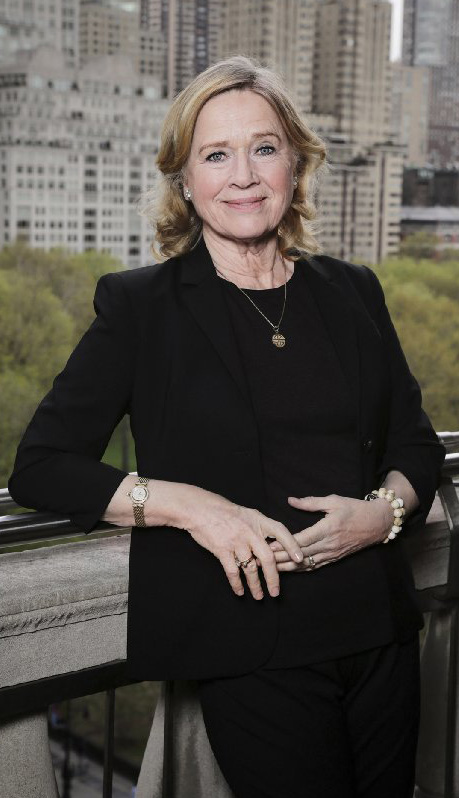
How is this possible? Because, I think, Ms Ullmann, shown at left, rather than offering up the coarsest view of these characters by catering to the most overt and envelope-pushing sexuality laid out in the play (yes, artists of a century past enjoyed pushing those envelopes, too: boot-licking, deflowering, and more than a soupçon of S&M), instead insists upon bringing these people to us as completely and fully -- physically, psychologically, emotionally -- as possible, and in the process makes them and their vehicle bloom as never before. While we certainly see them warts and all -- along with getting the full measure of class, gender and religious issues -- we also understand them and feel for them so strongly that, for the first time in my experience, I found myself not taking sides but wanting each character to somehow obtain her or his deepest longing. I am not at all sure that Strindberg himself would have countenanced this, so it has taken the talented, caring hand of a woman to bring it to fruition.

Casting is as vital to Miss Julie as in any other great play, perhaps more so because you want actors who will probe instead of giving in to the most obvious choices. Ullmann gets that from her three performers: Jessica Chastain and Colin Farrell (above) and Samantha Morton (below).

Ms Morton, in particular, takes what I have always seen as the minor role here and turns it into one of major proportions. Her gravitas wrests attention from the flightier Julie and makes us consider things like the power of the Church and knowing one's place in terms of both class issues and the male prerogative and gives these such a human face that we are in emotional thrall to her. Always a splendid actress, Morton may be giving her finest performance here.

Setting the play in Ireland, rather than in its native Scandinavia works well, too, as Sweden and Ireland at the end of the 19th Century seem to have had a lot in common.

Miss Chastain certainly rises to the challenge that Ullmann has set. She gives a thrillingly real, moment-to-moment performance that keeps us off-balance and yet in her corner. She's regal, gorgeous, sexual, commanding, frightened and finally greatly changed, even before the film's ending -- which, as I recall, is more blatant here than in the play.

The film's biggest surprise may be Mister Farrell. Always a good actor, but one better known for his looks, sex appeal and physical endowments, he manages to find such specificity in his performance that his John becomes the equal in interest of the other two characters, a man for whom we understand and feel his flaws as strongly as we do his strengths.

Ms Ullmann also opens out the film, showing us more of the mansion than we ever see in the play; in addition to the kitchen in which the play takes place, we visit various important rooms, as well as the much talked-about stable where certain events are said to have occurred.

The filmmaker has inserted an interesting visual prologue, too, of Miss Julie as a young child (played by newcomer Nora McMenamy). While this may not be completely necessary, it begins the film with a lush look at the family's estate while providing some clues to the girl's parents and her upbringing. It also ties visually the film's beginning to its sad end.

Miss Julie, from Wrekin Hill Entertainment and running 129 minutes, opens this Friday in New York (at the Landmark Sunshine Cinema) and Los Angeles (at The Landmark).

Rate it :
 

Find us on facebook

TOP
Copyright © 2014. Movies & TV Stream - All Rights Reserved
Template Created by ThemeXpose- Published By Gooyaabi Templates